


What is a Hernia?
A hernia is a weak spot between the muscles and connective tissue of the abdominal wall creating a gap where an organ or fatty tissue can push through and create a bulge that can cause pain or structural abnormality (1-2).
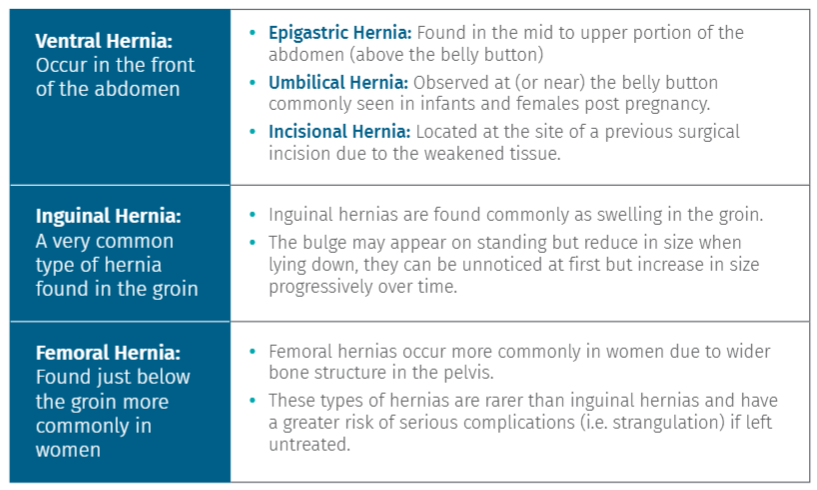
There are many types of hernias that are classified based largely on where they are located, some common types of hernias include (1-3):
Hernia Symptoms
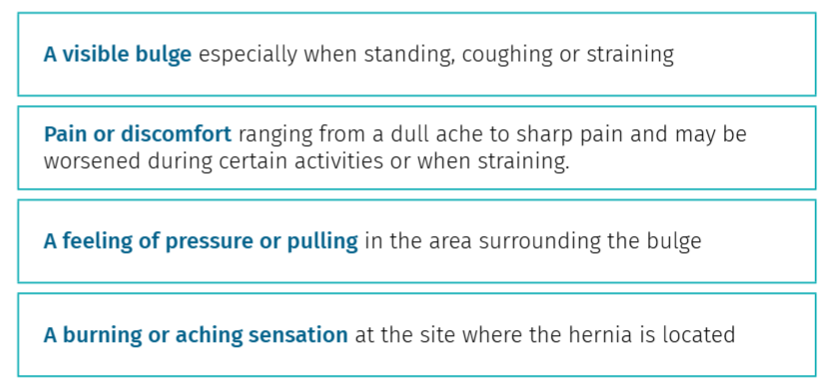
Symptoms of a hernia can vary depending on size and location, but many hernias commonly present with symptoms such as (1, 2, 4, 5):
When to seek urgent medical attention
The majority of hernias are not immediately life threatening and some may not cause any symptoms at all. Certain symptoms may indicate a life-threatening condition which is known as a strangulated hernia which occurs when tissue is trapped in the gap between the abdominal wall and loses its blood supply (1-5).
Symptoms of strangulation include (1-5):
• Sudden and severe pain that gets worse very quickly.
• Severe nausea and vomiting.
• Fever.
• Redness or discolouration at the bulge (location of the hernia).
• The bulge appearing firm, tender and unable to be pushed back into the abdomen.
If the above symptoms are experienced, present to your local emergency department.
Do I Need Treatment for a Hernia?
Although most hernias are not immediately life-threatening, they may worsen over time causing significant discomfort,
mobility issues and lead to a poorer quality of life. Choosing not to treat a hernia may put a person at risk of strangulation
or lead to significant progression in size, causing abnormalities to the abdominal wall requiring more complex and
specialised treatment (1-7).
Hernias will not get better on their own and in most cases require surgery to correct the defect in the abdominal wall
creating the bulge (1, 2, 4, 5).
If you are concerned about a possible hernia speak to your GP.
Hernia Surgery
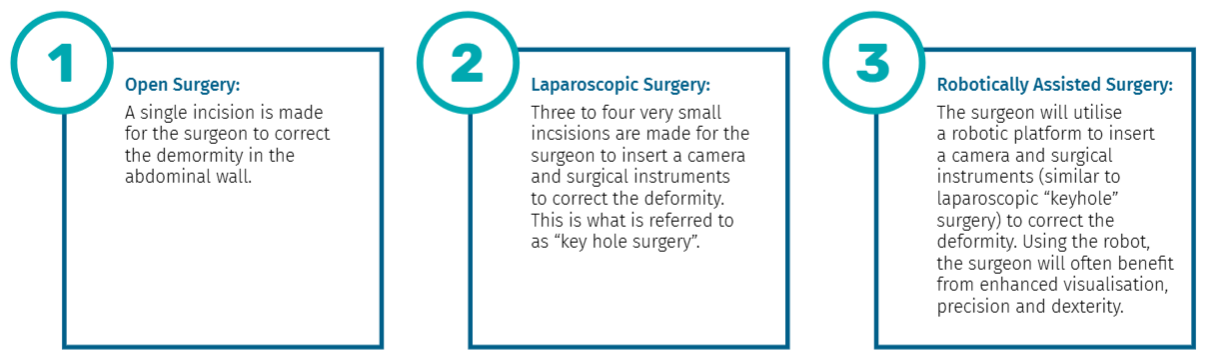
There are three main types of hernia surgery performed by appropriately trained surgeons (4, 6, 7):
Minimally Invasive Surgery for Hernia Repair
Robotic surgery is changing the way hernia surgery is performed allowing for greater visualisation, precision and dexterity
throughout the operation (4, 7).
Robotic surgery may provide benefits such as (4, 7):
• Smaller surgical incisions
• Less post-operative pain
• A faster return to daily activities of living
Your surgeon will be able to advise on the most appropriate surgical procedure for your condition and will relay any
possible risks or complications of surgery.
Some possible complications of surgery may include but are not limited to (4, 6, 7):
• Surgical site infection
• Bleeding
• Post operative pain
• Nerve damage resulting in numbness and tingling
• Damage to surrounding organs
• Adverse reactions to anaesthesia
• Mesh related complications resulting in chronic pain, infection or damage to surrounding tissues.
• Recurrence of hernia
Recurrence of Hernia
One possible complication of surgery is a recurrence of the hernia post-surgery. Although recurrence is relatively rare given
the number of hernia surgeries performed each year in Australia, a greater focus is needed to reduce the rate of recurrence
through improvements in surgical techniques and technology used to treat hernias (8).
Hernia surgeries are common, however greater focus is being placed on performing these initial surgeries to the highest
standards to ensure that better patient outcomes are achieved (8).


Prof. Ramana Balasubramaniam Dr Siobhan McKay
General, Bariatric & Upper GI Surgeon Hepatobiliary & Upper GI Surgeon
John Fawkner Private Hospital John Fawkner Private Hospital
P 0493 091 911 | F 03 9923 6457 P 0433 916 348 | F 03 9923 6722
View profile View profile
References
- Hernia: What it is, Symptoms, Types, Causes & Treatment
- Overview: Hernias - InformedHealth.org - NCBI Bookshelf
- Femoral Hernia: What It Is, Symptoms, Location, Repair
- Hernia Surgery — Dr Siobhan McKay
- Hernia
- Hernia Surgery: Types, What To Expect, Recovery & Complications
- Robotic Hernia Surgery: How It’s Done, Recovery & Side Effects
- Home - The ANZ Hernia Society
Please note:
While we make every effort to make sure the information contained in this blog and otherwise on this website is accurate and informative, it should not be used as a substitute for obtaining your own professional or medical advice.
Do not use the information in this blog:
- to diagnose, treat, cure or prevent any disease;
- for therapeutic purposes; or
- as a substitute for the advice of a health professional.
Healthscope Ltd and its related entities do not provide any guarantees, and assume no legal liability or responsibility for the accuracy, currency or completeness of the information contained in this blog or on our website, or for any injury, loss or damage caused by its use
